mercoledì, febbraio 10, 2010

Giorno del Ricordo


Dedicato a tutti i nostri connazionali trucidati e cacciati dalle loro case dalla barbarie comunista.

Dedicato a tutti gli oppositori, ai croati, agli sloveni internati e ammazzati per mano fascista.

Dedicato a chi crede nella libertà e si oppone ad ogni dittatura.

Dediacato alla gente del vecchio confine orientale fratelli nella nuova Europa.


martedì, gennaio 26, 2010

Memoria e rabbia


La giornata di oggi è dedicata al silenzio e alla riflessione.
Eppure io non riesco a non pensare come questa memoria noi la insultiamo ogni giorno, con i nostri silenzi e le nostre connivenze.
Perchè l'opera meritoria di tramandare il ricordo del male assoluto non può assolverci dalla apatica contemplazione di chi è calpestato in ogni parte del mondo nel suo diritto più sacro.
Ricordare Berlino ma dimenticare Teheran, Lhasa, Pyongyang, Rangoon, L'Avana, Grozny e tante altre terre disperate ha senso?
Viva la giornata della memoria, forse un giorno diventerà anche la giornata della coscienza ma quel momento è ancora troppo lontano.

lunedì, gennaio 25, 2010

Orthodox Church elects moderniser

Gavrilovic Irinej, 80, was picked as the new patriarch in a lottery-like draw
The Serbian Orthodox Church has elected a new leader, who is seen as open to modernisation at a time the country is seeking to join the European Union.

Gavrilovic Irinej, 80, was picked as the new patriarch in a lottery-like draw among three candidates who were initially chosen in a secret ballot by 45 Holy Synod bishops.

Irinej — the 45th Serbian patriarch — is considered a compromise candidate after a power struggle within the influential church between hard-liners and liberals over who would succeed Patriarch Pavle, who died last November after a long illness.

The 7-million-member church, whose influence rose during the Balkan wars in the 1990s and the surge of nationalism in Serbia, now has a major role in the country's policies.

Irinej's election signals that the church will stay neutral in the Serbian government's attempts to join the European Union and other Western institutions. The hard-line clergy say Serbia should instead opt for stronger ties with its traditional ethnic and religious ally Russia.

Irinej said in a recent interview that he would not oppose a visit by the Roman Catholic Pope to Serbia — one of the rare European countries the pontiff has never visited. The hard-liners have opposed the visit because of a historic schism between the two churches.

Religion analyst Mirko Djordjevic described Irinej as "a man of dialogue," and said his election was "good news for the church and the public."

"He is one of those people in whose biography no one can find a single extremist statement," Djordjevic said.

Pavle, highly popular among seven million Serbian Orthodox Church followers because of his modesty and humility, died Nov. 15 at the age of 95 after a long illness. He led the traditionally conservative church through its post-Communist revival.

The church said that among the three bishops shortlisted in the lottery-like draw were Amfilohije — an anti-Western hard-liner known for his ultranationalism who led the church for most of Pavle's two-year hospitalization — and another radical, Irinej Bulovic.

Bishop Irinej Bulovic said after the election "we should all be thankful that we chose the new patriarch so quickly, and in such a harmonious and a miraculous way."

lunedì, gennaio 18, 2010

Vuk il giovane


Il NY Times (atricolo di Nicholas Kulish) dedica un'intevista al giovane (giovanissimo) e discusso Ministro degli Esteri serbo, Vuk Jeremic.


Il giovane diplomatico, ultimo baluardo a difesa del Kosovo serbo, nega ogni compromissione con il nazionalismo, rivendica la maturità della democrazia serba e la sua aspirazione europea, non indietreggia sul Kosovo e non dimentica la propria origine (bosniaca).
Sicuramente l'astro nascente della politica serba, secondo molti l'unico erede del Presidente Tadic.


THE public face of Serbia for years has been that of a wizened war criminal in the dock in The Hague. Now, as the once-outcast country presses for membership in the European Union, it is increasingly represented by the gap-toothed grin of its energetic young foreign minister, Vuk Jeremic, all of 34 and a graduate of Cambridge and Harvard.
It is not just appearances. He is a minister in the most westward-leaning government Serbia has ever had, one that is aggressively pursuing membership in the European Union and good relations with the United States. Yet at the top of his agenda stands the issue that brought so much trouble to Serbia: the breakaway province and self-declared nation of Kosovo.
To the consternation of powerful supporters of Kosovo’s independence, including the United States, the Serbian obsession runs much deeper than a handful of ultranationalists from the generation of Slobodan Milosevic. Even young liberals like Mr. Jeremic, whose fluent English sounds more Bronxville than Belgrade, cannot let go of Kosovo, though it could endanger Serbia’s chance to move beyond its recent troubled past.
“The fact that this kind of fervent, pro-European politician in Serbia happens to have this position on Kosovo confuses a lot of people,” Mr. Jeremic said in an interview on the eve of the Orthodox Christmas here last week.
“This place, Kosovo, is our Jerusalem; you just can’t treat it any other way than our Jerusalem,” he said.
As if to underscore the point, his mentor and psychology teacher two decades ago at the First Belgrade High School, the current Serbian president, Boris Tadic, spent the holiday at the Visoki Decani monastery in Kosovo, under guard amid protests by local ethnic Albanians.
Mr. Jeremic quickly added that Serbia was not pressing its case through the use of arms, directly or in the form of paramilitary groups, but through institutions like the International Court of Justice, which will rule on the manner in which Kosovo declared independence. But the stakes are different, with vastly improved relations with the European Union and an end to Serbia’s isolation on the line.
Mr. Jeremic is at pains to explain to Western audiences that Serbia’s reputation from the Milosevic years had overshadowed the reality that it is now a democracy, and one whose voters twice chose pro-Western candidates in the presidential and parliamentary elections in 2008 — despite the inflamed nationalist sentiment in the wake of Kosovo’s secession.
He was appointed foreign minister at 31, too young and inexperienced in the eyes of many Serbs to be trusted with their most important national issue — the impending secession of Kosovo. Yet, he has fought hard for Kosovo, lobbying governments around the world against recognizing its independence and becoming along the way one of Serbia’s most popular politicians.
Mr. Jeremic’s stridency on Kosovo has led his opponents to charge that he was a closet nationalist, talking one line when he was abroad and quite a different one at home in the Balkans. “Personally, I don’t think I’m a nationalist,” he said. “I’m half Bosnian and half Serb.”
Mr. Jeremic’s great-grandfather on his mother’s side was Nurija Pozderac, a prominent Muslim politician before World War II who joined Tito’s Partisans to fight the Nazis and was killed in 1943. His paternal grandfather was an officer in the king’s army and spent much of the war as a prisoner at Dachau. Once he was liberated by the Allies, he returned to Serbia on foot, Mr. Jeremic said.
HE described a normal childhood in Belgrade, including a close relationship with his psychology teacher, Mr. Tadic. But his father, who worked for the state-owned oil company, and his mother went into exile after running afoul of the regime, and Mr. Jeremic finished high school in London before moving on to Cambridge, where he studied theoretical physics.
His time at Cambridge, which coincided with the war in Bosnia, helped him to understand Serbia’s image abroad in a very personal way. “It was hard to explain that you come from Serbia and you’re not a children-eating radical,” said Mr. Jeremic, who had family members fighting on both sides of the war in Bosnia.
Mr. Jeremic opposed the regime of Mr. Milosevic and was a founder of the Organization of Serbian Students Abroad in 1997, but it was during the NATO bombing of Serbia that he hardened his resolve to work for his country. He said he had high school friends who were also opposed to Mr. Milosevic’s reign but were called up for compulsory army service at the time of the airstrikes in 1999. Once they were wearing their uniforms, they were “legitimate targets,” as he put it ruefully, and some were killed.
He recalled thinking at the time: “This regime, this government, this guy, Slobodan Milosevic, he has to be removed, because he’s going to get us all buried. If he stays, he’s going to get us all buried.”
Mr. Jeremic traveled to Serbia to support the student movement there, known as Otpor, the Serbian word for resistance. After Mr. Milosevic’s ouster Mr. Jeremic followed Mr. Tadic through a succession of ministries as an adviser, taking a break for a degree from Harvard’s Kennedy School of Government, before himself becoming foreign minister.
With Serbia’s scant resources and tattered public image, his options for fighting the diplomatic might of countries supporting Kosovo, like the United States, Germany and Britain, seemed limited. But Mr. Jeremic, who still looks and sounds a bit like an overachieving college class president, turned himself into a one-man road show, traveling to 90 countries in the two years since becoming foreign minister. Last year alone he spent 700 hours in the air, or roughly 29 days, much of that in a 30-year-old French-built Falcon 50 jet that was bought for Tito.
MR. JEREMIC sees his age, which many consider a weakness, as one of his assets. “When you’re young, and when you come and they see you for the first time, a lot of them are just kind of surprised. They say, ‘Who’s this kid?’
“That’s actually a good thing because it opens up their minds. They’re curious. They want to hear what you have to say to them because you’re different,” he said. An afternoon with Mr. Jeremic, whose wife, Natasa Lekic, is a news anchor on Serbian public television, is a pleasant but intense experience, not complete without a glass of Serbian Carigrad red wine and a stream of articulate defenses of the country’s claim to Kosovo.
Smoking a cigar and sipping his wine, Mr. Jeremic refused to say what Serbia would demand if it managed to force Kosovo back to the negotiating table by winning its case before the International Court of Justice. He insisted that the mistake the United States and its allies made before Kosovo’s declaration was dictating rather than discussing terms.
Their other big mistake, he said, was expecting Serbia simply to acquiesce to the loss of the province, cowed in the face of American and Western European recognition for Kosovo. “This energy we invested, you know, in going around the world, has surprised a lot of people,” Mr. Jeremic said. “A lot of people didn’t expect us to dare to try.”

lunedì, gennaio 11, 2010

Uomini di buona volontà e altri meno


Le cronache balcaniche di inizio anno ci consegnano un nuovo Presidente in Croazia (il terzo nella storia della giovane repubblica) e precisamente Ivo Josipovic, esponente del partito socialdemocratico SDP che ha stracciato il suo diretto concorrente, il pirotecnico sindaco di Zagabria Milan Bandic (anch'egli esponente dello stesso partito fino a poco tempo fa, poi convertitosi al populismo per non essere stato scelto come candidato alla presidenza della repubblica).

Netto il responso delle urne: le schede deposte nelle 8363 sezioni elettorali hanno visto una buona affermazione per Josipovic, che ha raccolto oltre il 60% dei voti.

Priorità del nuovo Presidente saranno un'accelerazione nel processo di ingresso nell'Unione Europea di Zagabria e nuovi rapporti - improntati alla collaborazione - con le vicine Serbia e Slovenia.

Auguri.

Passiamo alla Serbia, il cui Presidente Tadic, in visita ufficiale a Banja Luka "capitale" della Repubblica Serba di Bosnia ha pronunciato un discorso coraggioso, chiedendo al parlamento dei serbo-bosniaci una risoluzione che riconoscesse i crimini commessi a Srebrenica.

Bravo.

E poi le brutte notizie, e restiamo a Banja Luka.

Il premier della RS Milorad Dodik continua imperterrito nelle sue provocazioni di stampo nazionalistico.

L'ultima boutade di questo piccolo Bossi in salsa bosniaca sarebbe quella di organizzare un referendum a favore del trattato di Dayton ma contro i poteri che lo stesso trattato attribuisce a quel cattivone di Valentin Inzko, alto rappresentante di quella comunità internazionale che in Bosnia si trova impantanata, ostaggio dei tanti Dodik che per non perdere il proprio potere clientelare tengono in ostaggio un Paese che deve superare Dayton, deve superare un sistema che obbliga a dividersi, moltiplica i livelli di potere - rendendoli non gestibili - e continua a premiare coloro i quali (di ogni "etnia") hanno distrutto quel Paese.

Ovviamente Dodik ha nuovamente minacciato la secessione della Srpska dal resto della Bosnia.

Posto che Belgrado a difendere un siffatto personaggio non ci pensa neppure sarebbe auspicabile - esercitando i poteri di Dayton - una sua rapida rimozione dall'ufficio.

giovedì, dicembre 31, 2009

Buon 2010


lunedì, dicembre 28, 2009

Presidenziali, Croazia al ballottaggio con sorpresa (o quasi)


Primo turno delle elezioni per il Presidente della Repubblica in Croazia e risultato (in parte) a sorpresa.

Se sorprende poco l'affermazione del candidato socialista Ivo Josipovic (SDP, grande favorito della vigilia) che si aggiudica quasi il 33% dei consensi (peraltro l'affluenza è stata molto bassa, di poco superiore al 50%) è invece sorprendente l'affermazione di Milan Bandic, eclettico sindaco di Zagabria che fino a qualche mese fa era un elemento di spicco dello stesso partito di Josipovic, salvo poi uscirne polemicamente per non essere stato indicato come candidato alla Presidenza della Repubblica.

Bandic, che ha raccolto il 14,8% dei voti si è avvalso della propria popolarità nella natìa Erzegovina (che è una regione della Bosnia ma è abitata in larga parte da croati) e di una campagna elettorale di stampo quasi nazionalistico, condita da molta demagogia.

In questo modo l'esplosivo Milan ha di fatto tolto voti al partito dell'ex presidente Tudjman, (HDZ Comunità Democratica Croata, il cui candidato Andrija Hebrang ha raccolto poco più del 12%) che al momento - pur esprimendo il primo ministro Jadranka Kosor (dopo le improvvise dimissioni di Sanader) soffre una grave crisi interna e svariate accuse di malgoverno e corruzione (non per niente il motto di Josipovic è stato "giustizia per la Croazia" pravda za Hrvatsku.
Va ricordato che il figlio di Tudjman si è candidato come indipendente ed ha raccolto un misero 4% ma forse ha estromesso proprio il partito del padre dal ballottaggio.

Entrambi i candidati comunque sono schierati per un rapido ingresso di Zagabria nell'Unione Europea, forse Josipovic potrebbe essere considerato un interlocutore migliore per gli altri paesi della regione, Serbia in testa.

Verdetto definitivo rimandato al ballottaggio, in programma il prossimo 10 gennaio.
I risultati definitivi del primo turno:
http://www.izbori.hr/2009Predsjednik/index.html

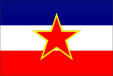
Bandiera della Jugoslavia che fu